A Christian King?
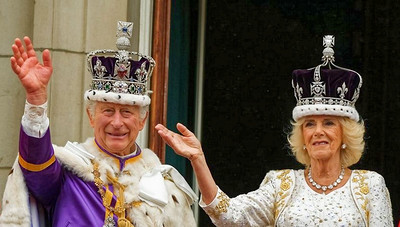
by Nick Bishop
For centuries, the British monarchy has stood at the centre of our national story. Kings and queens have been symbols of continuity, tradition, and, historically, Christian authority. But Britain has changed.
For many people today, the monarchy no longer feels particularly relevant to their everyday lives. Britain is increasingly secular, politically divided and culturally different from the country that existed when Queen Elizabeth came to the throne in 1952. The question therefore deserves to be asked: does the monarchy still have a meaningful purpose, or has it become an institution we preserve simply because it has always been there?
A Monarchy That Means Less to Many People.
The monarchy still attracts enormous attention. Royal weddings, coronations, and funerals can bring millions of people together. There remains genuine affection for members of the Royal Family. But affection is not necessarily the same thing as constitutional relevance.
A younger generation may reasonably ask what a hereditary monarchy contributes to a modern democracy. Why should one family automatically inherit the position of head of state? Why should the position be determined by birth rather than democratic choice? These are legitimate questions.
The monarchy’s defenders argue that it provides stability, continuity, and political neutrality. Unlike a president, a monarch does not have to campaign for office. The King can represent the country without belonging to a political party. There is something to that argument. But the counterargument is equally powerful: tradition alone is not necessarily a sufficient justification for an institution. If the monarchy is to survive, it must demonstrate it is still valuable to Britain rather than assuming people will continue to accept it.
King Charles and a Different Kind of Christianity.
There is another question which interests me as a Christian. King Charles has certainly not renounced Christianity. Indeed, his Coronation could hardly have been more explicitly Christian. He placed his hand on the Bible, swore the Coronation Oath and declared:
“I am a faithful Protestant”
He also promised to maintain the Protestant Reformed religion established by law and the Church of England. So it would be wrong to portray Charles as someone who abandoned Christianity. Yet Charles’s understanding of his religious role is noticeably different from his mother’s.
Queen Elizabeth II was remarkably inclusive towards other religions, but her public faith remained very clearly centred upon Christianity and Jesus Christ. Her Christmas broadcasts frequently spoke explicitly about Christ and her personal faith. Charles, on the other hand, has taken religious pluralism considerably further in his public language.
As Prince of Wales, he famously spoke about being a “defender of faith” rather than simply “Defender of the Faith” himself. He has also developed a particular interest in Islam and Islamic civilisation, speaking positively about aspects of Islamic thought and culture.
There is nothing inherently wrong with treating Muslims with respect. Christianity itself requires Christians to love their neighbours and to treat other human beings with dignity. But from a biblical Christian perspective, there is an important distinction between respecting another person’s faith and presenting different religions as equally valid expressions of spiritual truth.
The New Testament does not present Christianity as simply one path among many. Jesus says: “I am the way and the truth and the life”. That creates an interesting tension for a Christian monarch. Charles is constitutionally required to be a Protestant Christian and Supreme Governor of the Church of England, while at the same time he sees part of his role as protecting a religiously pluralistic society. The Coronation expressed this tension beautifully: the King was participating in an unmistakably Christian ceremony while praying a blessing “to all thy children, of every faith and belief”.
I would therefore describe Charles not as having abandoned Christianity but as having a much more explicitly interfaith conception of kingship than his mother did.
Defender of The Faith or Defender of Faith?
This raises a deeper theological question. The traditional title is Defender of the Faith, not Defender of Faiths. The title has a long history and remains part of the King’s formal legal title. From a Biblical standpoint, Christianity cannot ultimately be reduced to a general belief in “faith”. The object of Christian faith matters.
Christians believe that Jesus is the Son, not merely one spiritual teacher among many. Christianity makes the extraordinary claim that God has revealed Himself uniquely in Christ.
Consequently, a Christian monarch can quite properly say:
“I will protect Muslims, Jews, Hindus, Sikhs, Buddhists, atheists, and people of every conviction from persecution”. That is compatible with Christian ethics. But that is different from saying :
“All religions are equally true”. The first is religious liberty. The second would be religious relativism. Those should not be confused.
So Should Britain Abolish The Monarchy?
Perhaps the honest answer is: we should not preserve it merely because we are afraid of change. Nor should we abolish it merely because it is old.
The real question should be whether the monarchy continues to serve Britain.
If it provides continuity, represents the nation above party politics, supports charitble causes and gives people a sense of national identity, there is a reasonable case for keeping it.
But if increasing numbers of people simply regard it as irrelevant, then the constitution cannot expect automatic loyalty forever. A constitutional monarchy survives by consent. That means the Royal Family must continually demonstrate its relevance rather than assuming that tradition gives it a permanent entitlement.
A Crossroads.
King Charles represents an interesting crossroads. He is undoubtedly a Christian in the constitutional and personal sense that he has publicly professed the Christian faith. His Coronation Oath makes that unmistakable. But his conception of what a Christian monarch should be is different from that of Elizabeth II. His Christianity is accompanied by a stronger emphasis on interfaith dialogue, religious diversity and the protection of multiple ritual traditions.
Some Christians will welcome this development. Others will be concerned that an emphasis on religious pluralism risks diluting the distinctiveness of Christianity. Both perspectives deserve serious consideration. And beyond Charles himself lies the broader question: what is the monarch for?
If Britain concludes that it still requires a non-political head of state who embodies continuity and national identity, then the monarchry may have a continuing role. If, however, the British people increasingly decide that hereditary monarchy no longer aligns with their understanding of democracy, equality and modern citizenship, then Britain may eventually need to consider an alternative model.
The monarchy should neither be idealised nor dismissed uncritically. It should be evaluated. And perhaps that is the most responsible approach: to assess institutions by their outcomes, rather than preserving them solely based on tradition. At the end of the day, Charles, like all of us, falls short of the Glory. While the Bible tells us to pray for our leaders, whether they be religious, political, or royal, it also instructs us not to put faith in man or his institutions.
When all is said and done, there is only one King, and that, as they said in Cromwellian Times, is “King Jesus”!
God bless you
Nick x.
Recommended Posts

Let The Evidence Speak.
October 05, 2026

Living Day to Day.
September 21, 2026

When The Chips Are Down
September 14, 2026