Christian Nationalism.
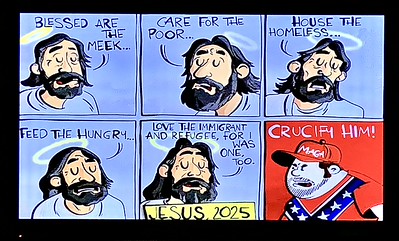
by Nick Bishop
In recent years, the rise of Christian Nationalism in American politics has become one of the most debated subjects in modern life. The movement is often linked to supporters of Donald Trump, although not all Christians who support Donald Trump are Christian nationalists, and not all Christian nationalists support Trump in the same way.
At its core, Christian nationalism is the belief that a nation, particularly the United States, should define itself primarily through Christianity and that government should protect or promote Christian identity and values. Supporters often argue that America was founded on Christian principles and that modern society has drifted too far from faith, tradition, and morality.
Critics, however, warn that the movement can blur the lines between faith and political power. They argue that when Christianity becomes too closely associated with nationalism, political leaders can begin to take on a near-religious status, which risks turning faith into ideology rather than spiritual truth.
This is where many Christians begin asking difficult questions about the teachings of Jesus Christ himself.
In the Gospels, Jesus Christ consistently emphasised humility, mercy, forgiveness, compassion for the poor, care for outsiders, and love for enemies. He warned against people’s pride, hypocrisy, greed, and the pursuit of worldly power. Christ’s kingdom, according to the New Testament, “was not of this world”.
Some theologians and Christians worry that modern political movements, whether left or right, can drift away from these teachings when they become driven by anger, tribalism, fear, or cultural warfare rather than by compassion and spiritual transformation. They argue that Christianity can become less about following Christ and more about defending identity, territory, or political influence.
Others counter that Christians have a right, even a duty, to bring their values into politics. They point to issues such as abortion, religious freedom, family structure, and freedom of speech as areas where they believe Christian morality should shape society.
The debate becomes especially intense around Donald Trump because he is viewed so differently by different groups. Supporters see him as a defender of Christianity against secularism and cultural decline. Critics point out that his personal style, rhetoric, and behaviour often seem at odds with traditional virtues such as humility, gentleness, and peacemaking.
The deeper issue may not simply be Trump himself, but a larger question facing Christianity: Should Christianity primarily seek political power and cultural dominance, or should it focus on spiritual witness, service, and the example set by Christ?
Throughout history, many Christians have warned that whenever the Church becomes too closely tied to nationalism or state power, faith can become distorted. History shows examples across many countries and eras where religion mixed with nationalism created division, intolerance, and hostility towards outsiders.
At the same time, faith has also inspired great acts of charity, justice, compassion, and social reform. The challenge for believers is discerning where the line lies between moral conviction and political idolization.
For many Christians today, the answer comes back to the teachings of Jesus himself: loving God, loving one’s neighbour, caring for the vulnerable, rejecting hatred, and remembering that no earthly leader is above moral accountability.
Whether one supports Trump or opposes him, the discussion around Christian nationalism raises an important spiritual question:
Is Christianity being used to reflect Christ or to gain worldly power?
God bless you
Nick x.
Recommended Posts

Let The Evidence Speak.
October 05, 2026

Living Day to Day.
September 21, 2026

When The Chips Are Down
September 14, 2026