Image Obsession and Folklore.
by Nick Bishop
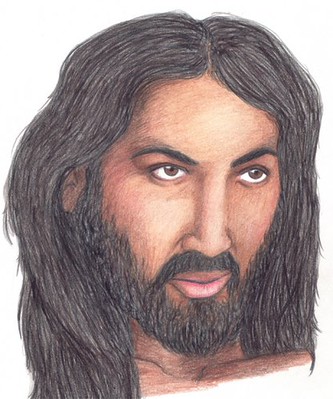
If we strip away centuries of paintings, icons, and cultural reinterpretation, the most historically grounded view is that Jesus Christ would have looked like a 1st-century Jewish man from the Levant, broadly what we now call the eastern Mediterranean.
That means he almost certainly would not have matched the European “fair-haired, pale-skinned Christ” of Renaissance depictions that emerged in different cultures. Those images say more about the societies that produced them than the historical figure himself.
In practical terms, someone from 1st-century Galilee (in the region of the modern Levant) would likely have had:
- Olive to medium-brown skin, shaped by sun exposure and ancestry.
- Dark hair (typically thick and curly or wavy)
- A short beard, as was customary among Jewish men of the time.
- A lean, physically active build from walking and manual labour.
That said, the Levant has always been a crossroads of peoples. African, Arabian, Mediterranean, and Anatolian influences all passed through it. So variation in appearance would have existed even then. It is not impossible that some individuals in that region, as they do today, had lighter features. Some with lighter hair and even blue or green eyes.
Over time, artistic traditions reshaped Jesus into different cultural “reflections”. In medieval and Renaissance Europe, he became increasingly Europeanised, sometimes even modelled after local beauty or authority. In later centuries, African and East Asian Christian communities naturally depicted him in their own likeness as well. These versions are devotional interpretations rather than historical portraits.
That is where the idea of Jesus “looking different everywhere” becomes interesting: it shows how deeply people connect identity with image. Each culture essentially reimagined him as someone who could belong among them. That says less about his actual appearance and more about human psychology. We instinctively make sacred figures familiar.
There are also later legends that try to extend his biography beyond the biblical accounts. Some traditions claim he travelled to India during the so-called “lost years”, often linking him to spiritual teachings in the east. Others suggest he visited Britain, sometimes involving tales of a relative trading or fishing. These stories are popular in folklore and modern alternative histories, but there is no reliable historical or archaeological evidence supporting them. They remain speculative and outside mainstream scholarship.
What most historians agree on is simpler: there is no solid evidence that he travelled far outside Judea, Galilee, and the surrounding regions described in early Christian and Roman sources.
And yet, despite all the fascination with what he may have looked like or where he may have travelled, the central point in Christian belief remains unchanged: his appearance is not the focus of the message. The emphasis is on his teachings, actions, and the spiritual significance attributed to his life, rather than on his physical features or on how later cultures chose to portray him.
In a way, obsession with his image reflects something broader about modern culture. Today, we are visually saturated, constantly defining people by appearance, representation, and identity. But in the earliest traditions, the emphasis was far less about how he looked and far more about what he represented: compassion, justice, sacrifice, and spiritual transformation.
So while history can sketch a likely physical outline of a 1st-century Levantine man, it ultimately leaves the deeper question untouched. The enduring impact of the figure lies not in his face, but in the ideas and stories built around him.
God bless you.
Nick x.
Recommended Posts

Let The Evidence Speak.
October 05, 2026

Living Day to Day.
September 21, 2026

When The Chips Are Down
September 14, 2026